
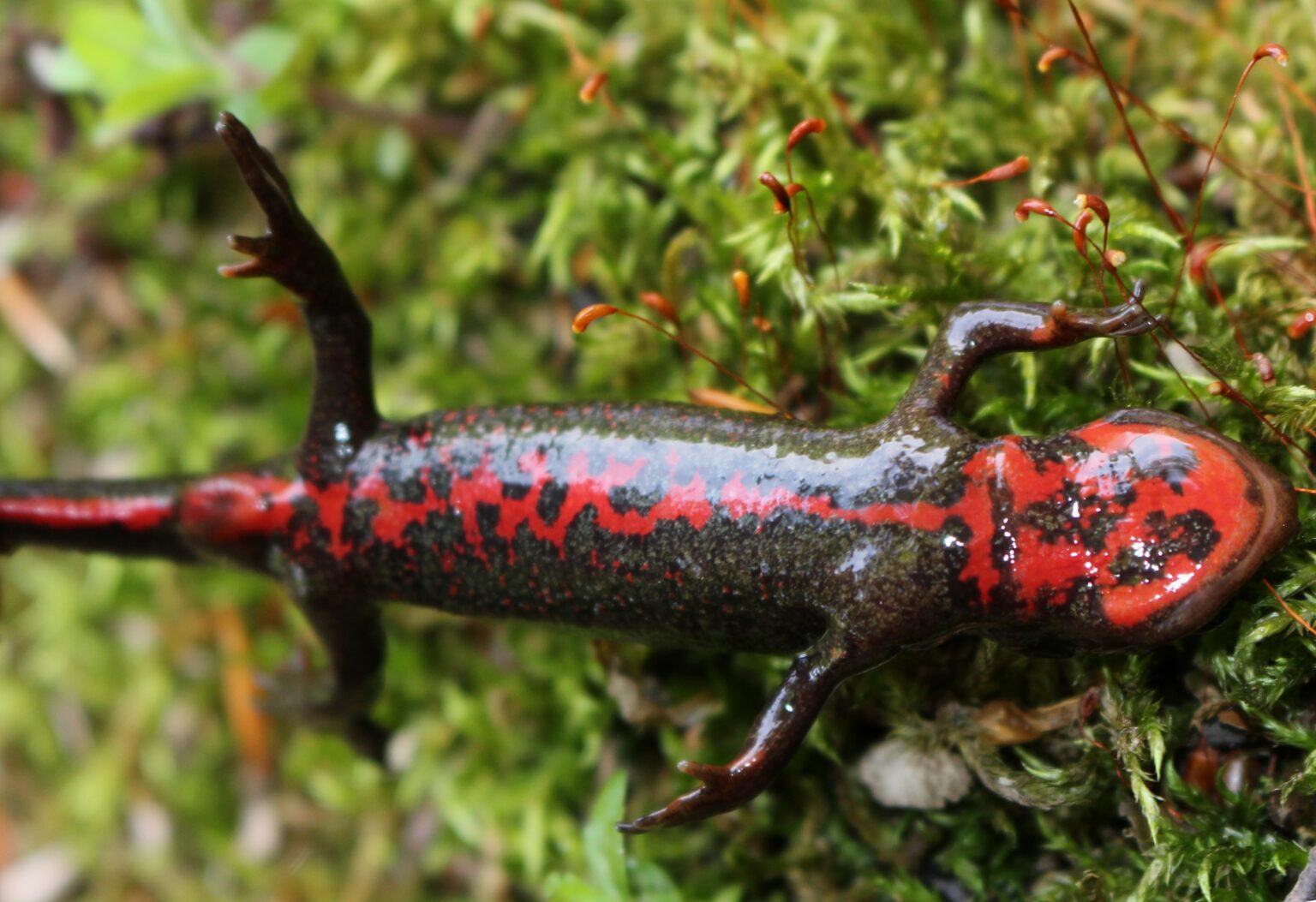
Newts hold the secret to the elixir of youth
Newts are miraculous creatures. What’s so miraculous about these slimy amphibians with tails? Well, they’re not cats with nine lives, but they come pretty close. They can regenerate and regrow body parts like limbs, parts of the heart, spinal cord, brain and more. This might be why they have been associated with witchcraft for ages just like the cats.
Unlike mammals, newts (which are salamanders in the subfamily Pleurodelinae), have a remarkable ability to repair their spinal cord after an injury and regain function after paralysis. They could start using their hindlimbs just four weeks post-injury. Various studies are being conducted to understand the role of various types of spinal cord cells involved in the regeneration process.
Pretty cool, huh?
Regeneration is how animals repair damaged or lost body parts. A house lizard regrowing its lost tail is a good example of regeneration. Some animals can be super regenerators as they can regrow entire organs. Newts seem to be
winning the contest with the ability to regenerate the most organs, multiple times and throughout their lifetime.
Extreme regeneration is for newts only
Newts’ capacity to regenerate does not decline with age, nor with repeated regeneration, as seen in most animals that lose this ability as adults. A 2011 Nature Communications study found that Japanese fire-bellied newts regenerate their eye lenses 18 times over 16 years. And the most remarkable aspect – each of the regenerated lenses were similar structurally and genetically! This consistency makes the regeneration capability even more envious. In other animals, mutations creep in with repeated regeneration and hence the organs and their function may not be perfect as they age.

.jpg)
Only one other animal – the axolotl – comes close to having this ability, but with a caveat. An axolotl is a species of salamander that does not undergo metamorphosis and retains a water-breathing, larva-like form its entire life.
Newts never get old
Newts routinely refurbish their bodies with new parts. But they also live for a very long time, and that makes them an exciting model for regenerative and ageing studies. A newt can live to be 25, whereas other animals their size only get to about a fifth of that age at best. Unlocking the mechanism of longevity may provide insights for human ageing studies. Newts have a powerful immune system that prevents the accumulation of old and ineffective cells. Boosting our immune system in ways to match the newts can help our body to stay healthier longer.
During an organism’s lifespan, cellular information is copied repeatedly with every replication. Like a game of broken telephone, tiny errors in copying the information are repeated and amplified every time the cell replicates. As the organism ages, these accumulated errors cause all sorts of inefficiency and issues, until finally these errors cause the cells to stop dividing and their health deteriorates, which is called senescence.
Newts do not seem to exhibit any signs of ageing at the end of their lifespans and have very low rates of senescence. Their cells continue to divide and make new healthy organs until the end. So, not only do they live longer, but they stay young the entire time too. Age is just a number for newts

How do newts continue to regenerate as adults?
Like many animals, young newt larvae recruit stem cells and progenitor cells to the injured area to regenerate. Stem cells are cells with the potential to develop into many other cell types depending on the need. Progenitor cells are similar to stem cells but are a little more limited in their capability of becoming different cell types. These cell types decrease with age and hence, it might be the reason why many organisms lose regeneration capacity as adults.
Newts’ unique ability to continue regenerating as an adult comes from switching to a different repair mechanism after metamorphosis. Adult newts recruit cells which de-differentiate, changing into the cells needed for regeneration. They do the opposite of what stem and progenitor cells do.
Dedifferentiation is losing specialized function and reverting to its more basic form. Dedifferentiated cells also gain the ability to divide and proliferate again. This mechanism allows newts to be one of the only two organisms capable of complete heart regeneration. Zebrafish is the other only organism demonstrating complete heart regeneration. When a section of the heart tissue is removed surgically in these animals, a clot is formed in that area to stop bleeding and heart cells from other areas will migrate and replace the clot and heal the area. In humans, the heart cells don’t go to the injured area and are left with scarred tissue instead. The advantage of this approach is that newts don’t have to rely on declining populations of stem or progenitor cell types.
Can we translate newt regeneration to humans?
As fascinating as it might be, translating this knowledge into human studies comes with its own set of hurdles. For starters, newts have a genome ten times larger than that of humans, and many genes unique to them. We may not be able to use this knowledge to regenerate our limbs, not yet anyways, but it can help us understand and provide valuable insights for therapeutic fields like cancer research and ageing. Newts may be our key to unlocking the secret to the elixir of youth.
Header image from Alpsdake via Wikimedia Commons.
.jpg)
A WordPress Commenter
Hi, this is a comment.
To get started with moderating, editing, and deleting comments, please visit the Comments screen in the dashboard.
Commenter avatars come from Gravatar.